
Most sales teams have had some version of the same AI message by now. The business has bought the licences, someone has run a lunchtime session, and everyone has been encouraged to try it for research and to write their emails faster.
None of that is wrong, and it's a fair place to start. But it treats everyone in the sales function as if they do the same job, and they don't. A business developer and a customer success manager might sit in the same team meeting, but their working weeks have very little in common. If the work is different, the help they need from AI is different too. And if you're the leader of that team, getting this right matters more than it might look.
Why this matters to you as a sales leader
We built MyAcumen from the ground up with AI at its core, so I've spent a lot of time working out where it earns its place and where it doesn't. Used well in a sales team, I'd put the benefits into four groups:
- Time. Most of a seller's week isn't spent with customers. It goes on research, preparation, notes, follow-ups, CRM updates and reports. AI can take a good share of that, and every hour it gives back is an hour that can go on customers.
- Quality. Each conversation starts better prepared. A seller who used to do ten minutes of research can now walk in knowing the customer's results and market. They can also have a good idea of what's on the buyer's mind.
- Speed. Follow-ups go out the same day, proposals take hours rather than days, and new starters can get up to speed faster because the knowledge they need is easier to find.
- Insight. It becomes easier to see what's going on across a pipeline or a set of customers, so a stalled deal or an unhappy customer shows up earlier, while there's still time to do something about it.
Now think about what happens if your team doesn't get those benefits and your competitors do.
Their sellers arrive at a first meeting knowing more about the buyer than yours do. They respond faster, and their proposals fit the customer better. Their account managers spot a change inside a customer before yours hear about it. Their customer success team sees a customer drifting away months before the renewal. None of that happens in one quarter, but it adds up. Over time, your team works just as hard for fewer and smaller wins. Each deal costs more to win, and your forecast has more surprises in it.
There's a people cost too. The ambitious sellers you most want to keep are often the ones keenest to work this way. If they can't do it in your team, some of them will find a team where they can.
Over 25 years of leading and advising sales teams, I've watched plenty of new tools arrive with big promises, and some made far less difference than promised. I think AI is different, because it changes how much a well-prepared seller can get done in a week. But the benefit only shows up if it fits the work each person does.
AI should do the work around the conversation, so your people can focus on the conversation itself
High value sales and key accounts are still won and retained by people. Buyers want to deal with a team who understands their business and can be trusted to do what they say. AI doesn't change that.
So here's a simple test for any use of AI in a sales role. Does it give the person more time with customers, or a better conversation when they're there? If it does neither, it's probably a distraction. And if it starts doing the part that needs the person's judgement, like deciding what to recommend or what a customer meant, customers tend to notice, and it can cost you the trust you were trying to build.
What AI means in four different roles, and what it costs to fall behind.
Hold each role up against that test and the value of AI looks very different from one to the next.
Business developer
The job is finding the right companies, getting a first meeting and turning that conversation into an opportunity worth chasing.
Where AI can help:
- Researching a prospect before a first call: their recent results, news, the people involved and what's likely to be on their mind.
- Writing a first message that fits that company, rather than a template with the name changed.
- Preparing sharper questions for a discovery meeting, and turning the notes into a clear follow-up.
The value: more prospects researched properly each week, more replies to first messages and better-qualified opportunities in the pipeline.
The cost of falling behind: a buyer often decides in the first conversation whether a seller is worth their time. If a competitor's business developer turns up knowing their business and yours turns up with a standard pitch, you can lose the deal before it's even in the pipeline.
What stays with the person: reading the buyer, asking the question that makes them think differently, and judging whether this opportunity deserves more of their time.
Account manager
The job is growing a set of existing customers. That means understanding their business, knowing who matters inside it and finding room to do more together.
Where AI can help:
- Pulling together what's changed in the customer's business and market before an account review.
- Mapping the stakeholders from notes and emails, and spotting the people you haven't met yet.
- Drafting an account plan for the person to sharpen, and summarising long email threads before a call.
The value: account reviews that show the customer you understand their business, more of the right people covered, and growth opportunities spotted earlier.
The cost of falling behind: you find out about a new director, a restructure or a new project after a competitor has already had the conversation. Growth that should have been yours goes to someone who was better prepared.
What stays with the person: the trust that gets them told what's going on inside the customer, and the judgement to read the politics behind a decision.
Customer success manager
The job is making sure customers get the value they paid for, spotting risk early and keeping them for the long term.
Where AI can help:
- Looking across every customer for early warning signs, like usage dropping, support tickets rising or a main contact going quiet.
- Preparing a business review with the evidence of value already pulled together.
- Summarising customer feedback so the themes are easy to see.
The value: risk spotted months earlier, a larger set of customers looked after without losing touch, and renewals backed by clear evidence of what the customer has gained.
The cost of falling behind: you find out a customer is unhappy when they tell you they're not renewing. Every customer lost that way is revenue the business had already won and has to go and win again.
What stays with the person: the conversation with a customer who's unhappy, and the decision about what to do to keep them.
Sales leader
The job is developing people, running the pipeline and calling an honest forecast.
Where AI can help:
- Preparing for a pipeline review by picking out the deals that haven't moved and the questions to ask about them.
- Getting ready for a coaching conversation by pulling together that person's notes and recent results.
- Drafting the reports that take up hours every week.
The value: time moved from admin into coaching, pipeline reviews that get to the deals needing attention faster, and a forecast you can stand behind.
The cost of falling behind: you stay busy with reports while coaching gets squeezed into whatever time is left. And it's hard to help your team use AI well if you don't use it yourself.
What stays with the person: the coaching itself, the judgement about each person in the team, and the forecast call they put their name to.
Inside sales and sales engineers would each have their own list again, which is the point. "Use AI for research" is a fair start for most of these roles, but it's not where the biggest value is for any of them.
Buying the licence is the easy part
You can give everyone in your team the same AI tool on the same day. What you can't hand out is each person's readiness to use it well.
In most sales teams you'll find a mix. Some people are wary of AI and haven't tried it beyond a quick look. Some tried it once, got an average answer and went back to the old way. Some use it every day but send a customer whatever it gives them without checking. And some have built it into how they work, and they're getting hours back each week.
Those people might have the same job title and the same licence, but they need very different help from their manager. Left alone, the gap between them gets wider. The people already using AI well keep getting better at it, while the rest stand still. A team-wide AI session is only likely to reach a few of them.
So how ready is your team?
Here's the challenge. Take each person in your team, one at a time, and ask yourself:
- Can I name the one part of their job that AI should be taking the load?
- Do I know whether it's doing that today?
- If I asked them, would they agree on how AI helps them with this?
- When they do use it, do they check what it gives them before it reaches a customer?
If you can answer those for everyone, you're in a strong position. If you can't, you may have AI licences, but you don't yet have a plan for how AI is going to help each of your people.
Frequently asked questions
Why shouldn't every sales role use AI in the same way?
Because the jobs are different. A business developer needs help finding and preparing for first conversations, an account manager needs help understanding a customer's changing business, and a customer success manager needs help spotting risk early. If the work is different, the help that matters most is different too.
What should AI do in a sales role, and what should stay with the person?
AI should do the work around the conversation, such as research, preparation, summaries and drafts. The person keeps the conversation itself, along with the judgement about what to recommend and what a customer meant. A simple test is whether the use of AI gives the person more time with customers, or a better conversation when they're there.
What does it cost a sales team to fall behind on AI?
It rarely shows up in one quarter. Over time, competitors' sellers turn up better prepared, respond faster and spot changes inside customers earlier. Your team works just as hard for fewer and smaller wins, each deal costs more to win, and your forecast has more surprises in it. You may also lose the ambitious sellers who want to work this way.
Is giving everyone the same AI licence enough?
No. A licence gives people access, but it doesn't give them the readiness to use it well. In most teams you'll find a mix of wary people, people who tried it once and gave up, people who use it daily without checking the output, and people who have built it into how they work. Each needs different help from their manager.
How can a sales leader tell how ready their team is for AI?
Take each person in turn and ask whether you can name the one part of their job where AI should be taking the load, whether it is doing that today, whether they would agree, and whether they check what it gives them before it reaches a customer. The MyAcumen assessments measure this person by person, and the free Team mini-assessment gives you a quicker first look.
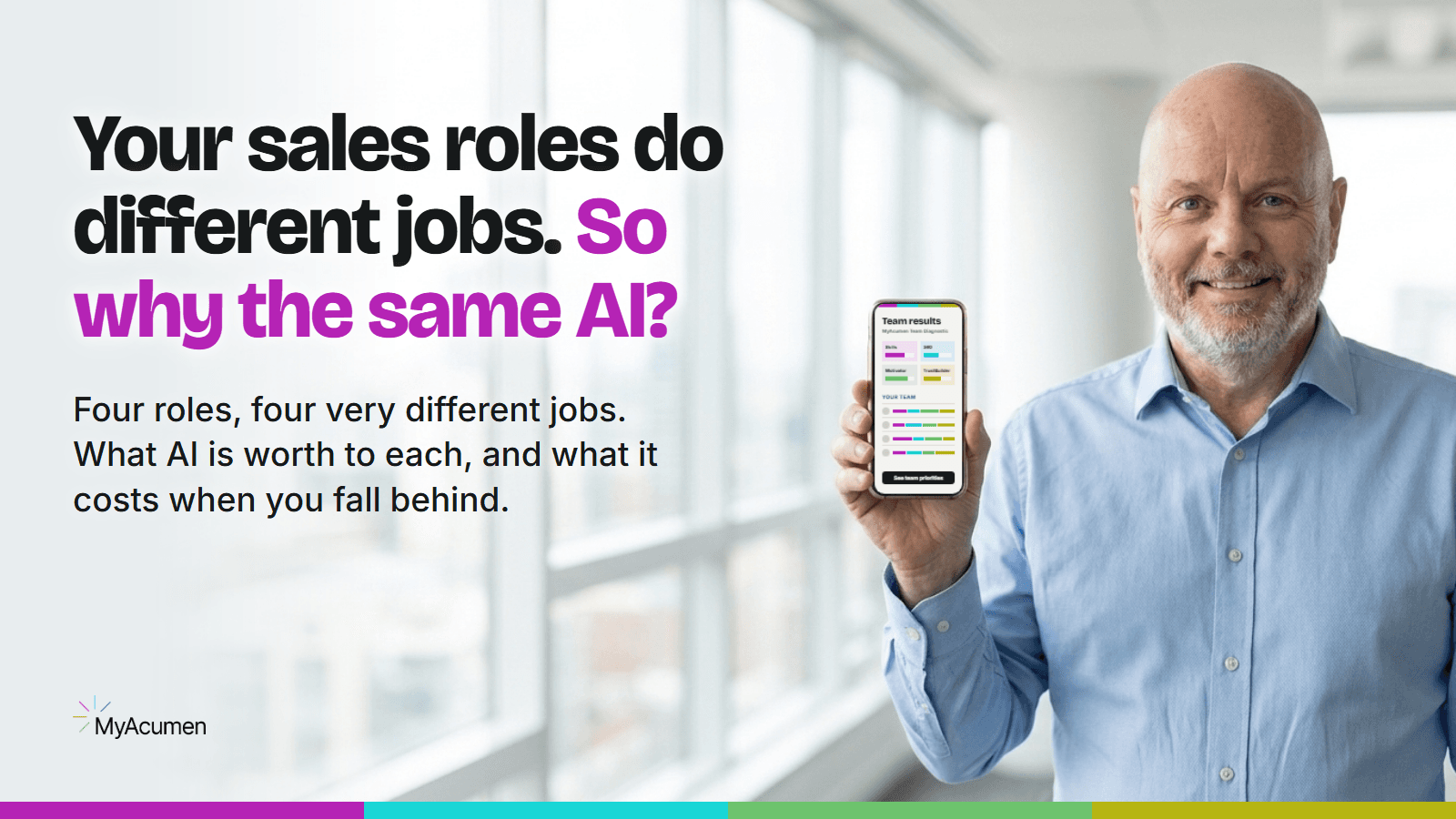
PS. You can measure this, person by person. We built AI readiness into the MyAcumen assessments, with questions about how each person uses AI in the specific work of their role, alongside how they feel about it and how much it's part of their week. In the MyAcumen Team Diagnostic, you see it across the whole team.
Next week, I'll go through what we look at and why each part matters.
If you'd like a quicker first look at your team, the free mini-assessment takes about four minutes and shows you where the gaps in your team are likely to be.