
Most sales leaders know their top performers inside out. Four reps on a team of twenty who close consistently, rarely discount, and carry the number when things get tight.
The question that gets asked far less often is this: what is the middle 60% actually costing you?
Not in salary. In revenue left on the table.
The maths most sales leaders never run
Take a B2B tech services team of twenty. The top four reps close twelve deals a year each at full price. One a month, every month. At an average contract value of £180,000, those four people generate £8.6 million between them.
The middle twelve reps close six deals each. One every two months. Good enough to keep, not strong enough to lead. But here is the number that rarely gets calculated: they discount to close. Fifteen percent on average to get over the line. That takes their effective deal value from £180,000 to £153,000.
Twelve reps. Six deals each. £153,000 per deal. That is £11 million from the middle of the team.
Now run a different scenario. Not an unrealistic one. Not asking the middle to become the top. Just asking them to close nine deals a year instead of six, and to reduce their average discount from fifteen percent to seven and a half.
One extra deal per quarter. Half the discount.
Twelve reps. Nine deals each. £166,500 per deal.
That is £18 million.
The same twelve people. The same territory. The same product. A £7 million difference.
Why the middle discounts
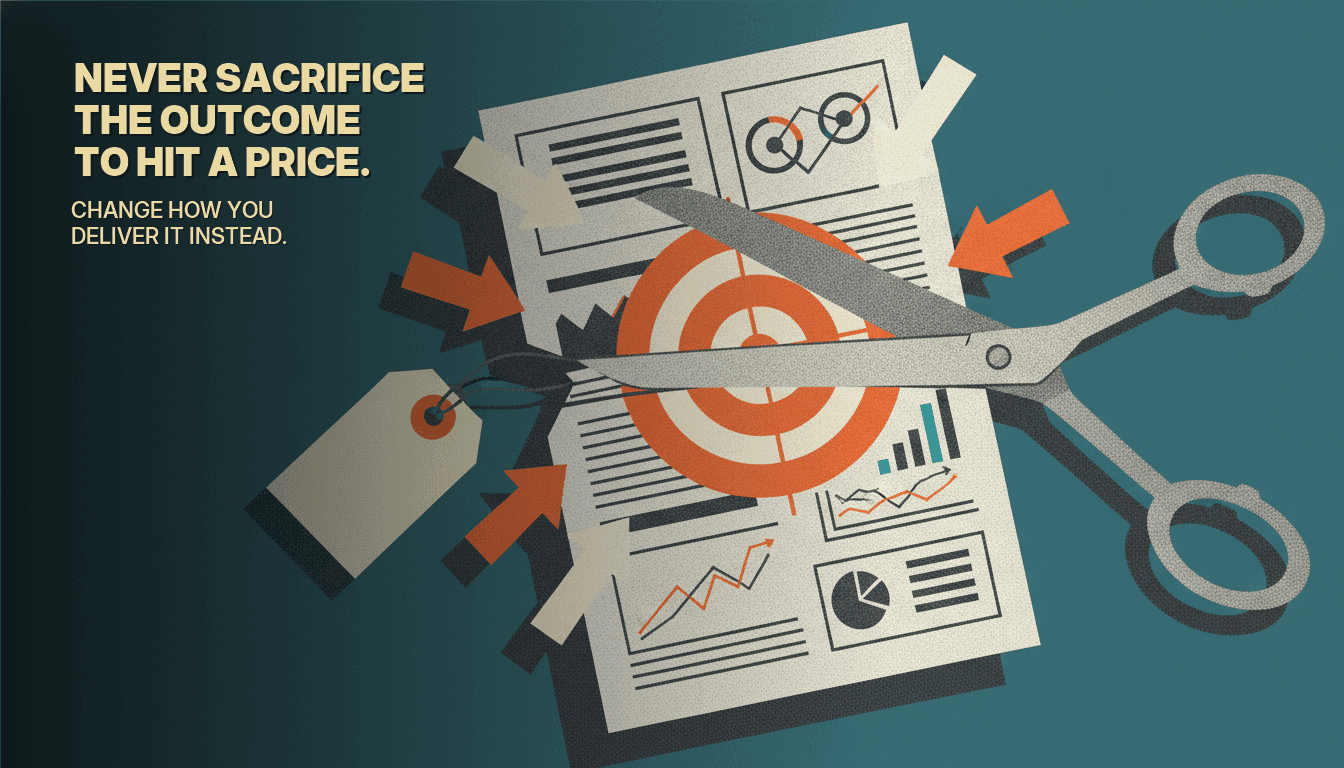
It would be convenient if the discount was a negotiation problem. Train the team on negotiation tactics, tighten the approval process, require sign-off for anything over ten percent.
It rarely works, because the discount is not where the problem lives.
Reps discount because they have not built a compelling case for the price earlier in the process. When a senior buyer pushes back, a rep who has quantified the cost of inaction and the expected return can hold their ground. A rep who has not got that far has nothing to stand on except the relationship, and relationships bend under commercial pressure.
The fifteen percent discount is the tax you pay for weak discovery and poor business acumen two or three meetings earlier. Fixing the negotiation is treating the symptom. The capability gap is further upstream. See how transactional and consultative selling differ and how to move up
The precision problem
The middle of a commercial team is not unmotivated. In most cases these are people constrained by two or three specific capabilities that nobody has ever named precisely enough to address.
They have been told to be more consultative. They have attended the training. They know the framework. But knowing what a strong discovery question looks like is not the same as using one consistently under pressure, in a real meeting, with a buyer who would rather talk about your product than their commercial problems. Read more about what consultative selling actually requires
The gap between where the middle sits and where it could be is usually smaller than it appears. It is not a broad capability failure. It is a handful of specific habits that have not been identified precisely enough for anyone to do anything targeted about them.
For some it will be business acumen: the ability to hold a credible commercial conversation at director level. For others it will be value case building, the confidence to put numbers around the cost of inaction and make the financial argument for change. For others it will be discovery: asking questions that shift how the buyer thinks about their situation, rather than confirming what they already believe.
These three problems produce almost identical symptoms. Deals that stall. Meetings that go well but do not advance. Discounts that appear at the last moment. But they require completely different development responses. Aiming a single intervention at all three fixes none of them.
What it takes to move the number
The £7 million scenario above does not require a transformation programme. It requires knowing which two or three capabilities are the actual constraint for each person, and addressing those specifically. Not a generic course aimed at everyone. A precise intervention aimed at the right habits for the right individual.
This is why development that starts with diagnosis produces results and development that starts with training rarely does. You cannot lift the middle with a programme aimed at no one in particular. The data has to come first.
One thing to do this week
Run the maths for your own team. Take your middle performers, apply their actual average discount rate to their annual deal volume, and calculate what that costs you over a year. Then model what happens if each of them closes three more deals and cuts the discount in half.
The number will tell you how much the precision problem is worth solving.
If you manage a commercial team and want to understand exactly where the capability gaps sit, MyAcumen gives you a consolidated view across skills, motivation, personality, and 360-degree feedback for every individual. Not a team average. A precise picture of who needs what and why.
Find out more about the MyAcumen Team Diagnostic